
The properties of edible oil that matter for filling
Edible oil is a low-to-medium viscosity liquid that is generally easy to fill. However, it has one important property: it is slippery and creates significant foaming risk at high fill speeds. The filling machine nozzles must be designed to fill from the bottom of the bottle upward (bottom-up filling) to minimize foam. Edible oil also leaves residue on nozzles and machine surfaces, requiring thorough daily cleaning.
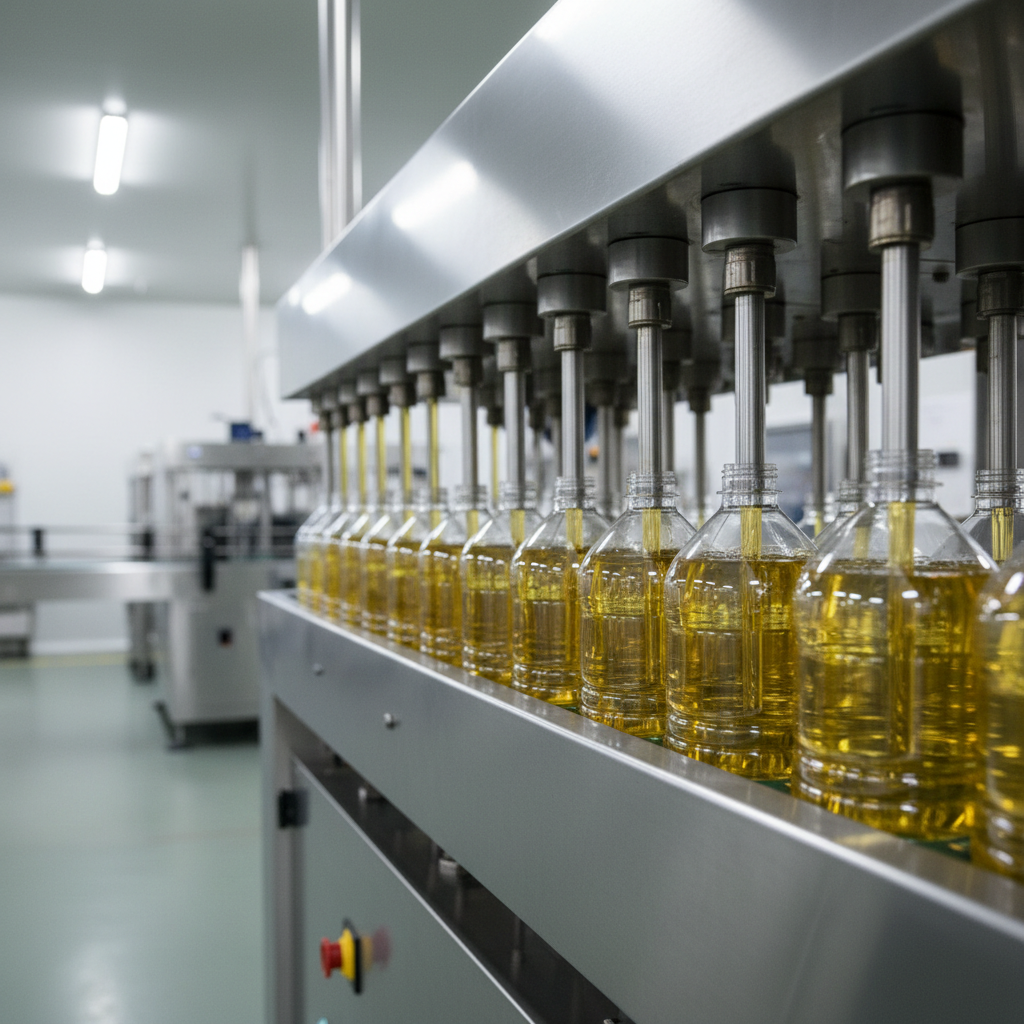
Edible oil is slippery with foaming risk at high speeds — bottom-up filling nozzle design is essential to prevent foam and spill.
Container types for edible oil
The most common containers for edible oil are PET bottles from 0.5L to 5L and HDPE jerry cans from 5L to 20L. Each requires a different filling approach. PET bottles in the 0.5L to 5L range are typically filled with servo piston fillers. Jerry cans in the 5L to 20L range are typically filled with lobe pump fillers.
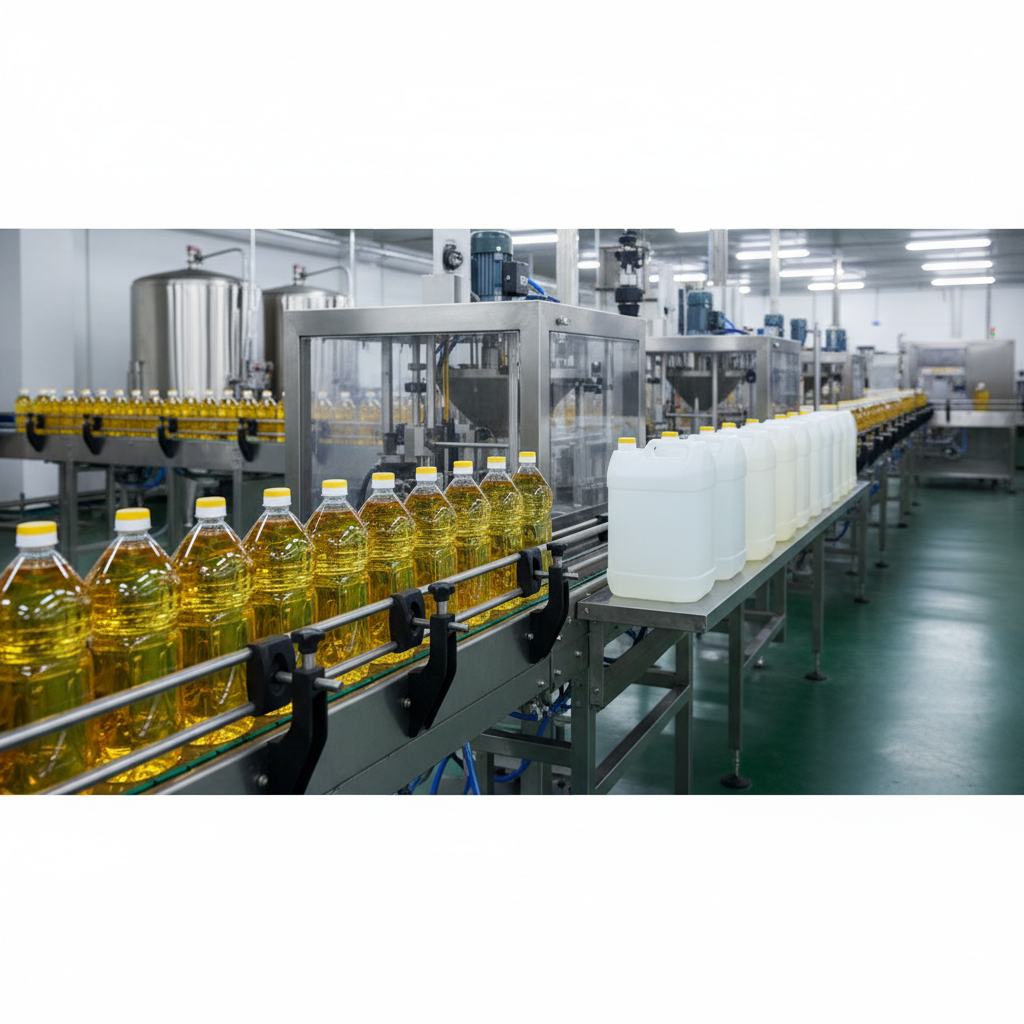
PET bottles (0.5L–5L) use servo piston fillers; HDPE jerry cans (5L–20L) use lobe pump fillers — different machines for each format.
Filling machine selection for edible oil
For standard edible oil filling into PET bottles, 304 stainless steel servo piston filling machines are the most common choice. The filling accuracy of servo piston machines is critical in oil filling — a 1% overfill on a high-volume oil line wastes significant product value over a production year. For larger container sizes, lobe pump fillers provide the most reliable output.
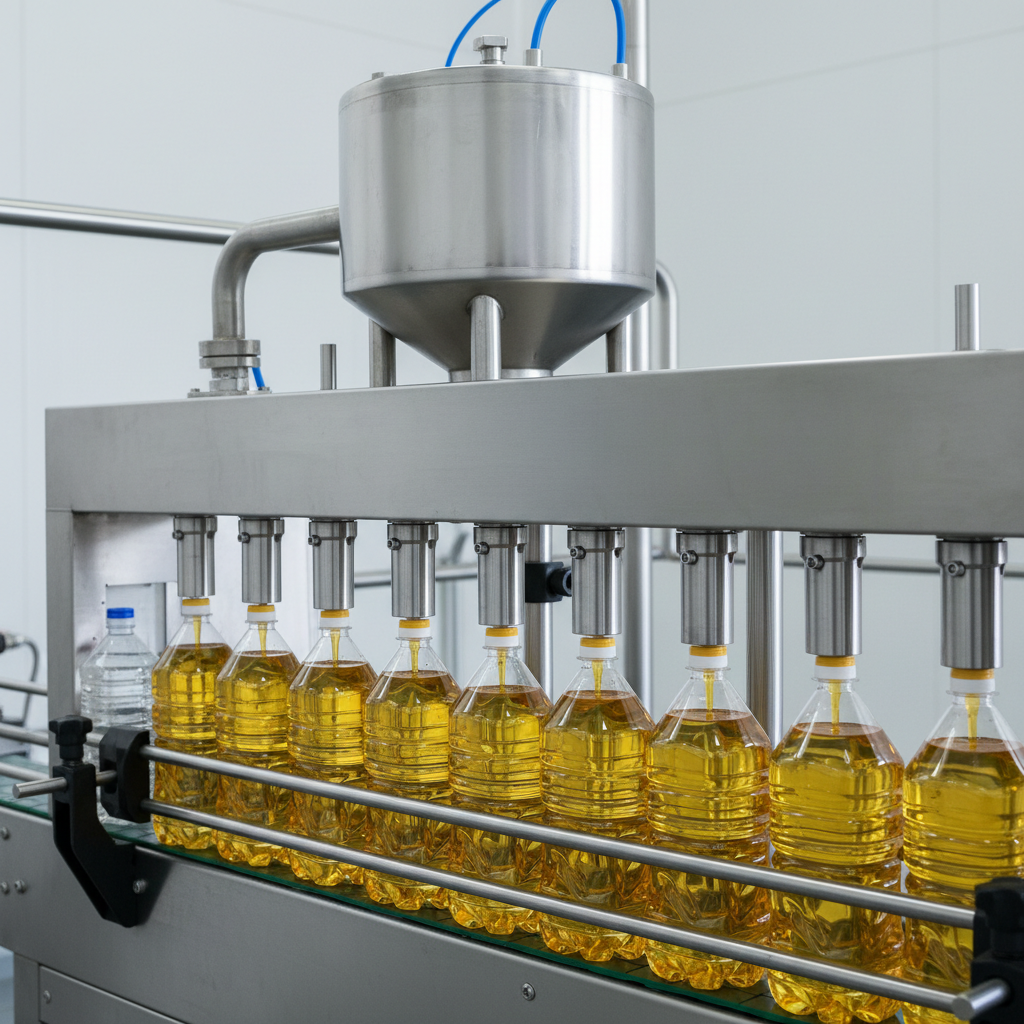
304 SS servo piston fillers are standard for oil into PET — 1% overfill on high-volume lines wastes significant product value annually.
Capping for edible oil containers
Most edible oil PET bottles use screw caps. Induction sealing is increasingly used for premium oil products as a tamper-evidence measure. Jerry cans use larger screw caps that require a different capping head specification. Cap torque consistency is important — under-torqued caps leak; over-torqued caps are difficult for the consumer to open.
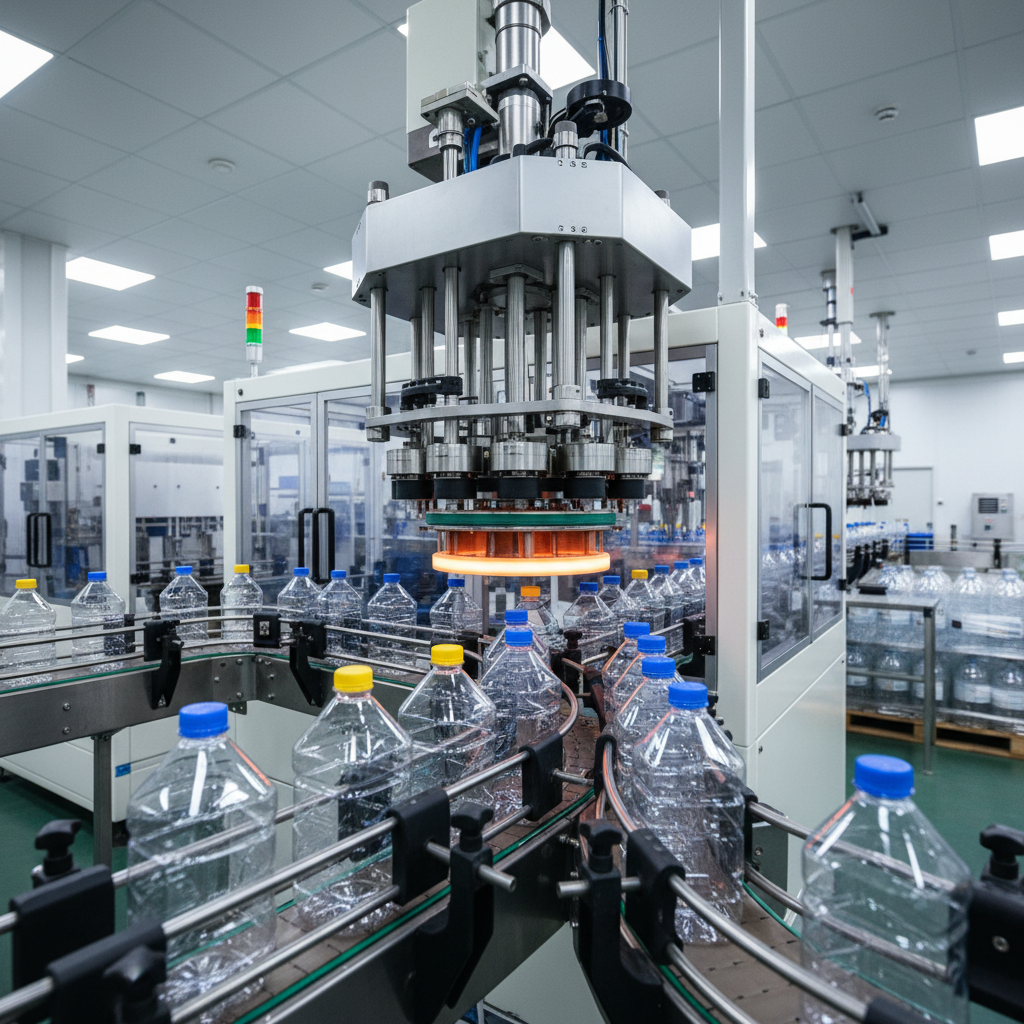
Consistent cap torque is critical for oil — under-torqued caps leak in transit; over-torqued caps frustrate the end consumer.
Labeling for edible oil
Edible oil bottles present a specific challenge for labeling: oil contamination on the bottle exterior from filling and handling can prevent adhesive labels from adhering properly. The filling machine nozzle design must minimize external oil contamination, and the conveyor between the filler and the labeler must include a wipe-down or cleaning station for the bottle exterior before labeling.
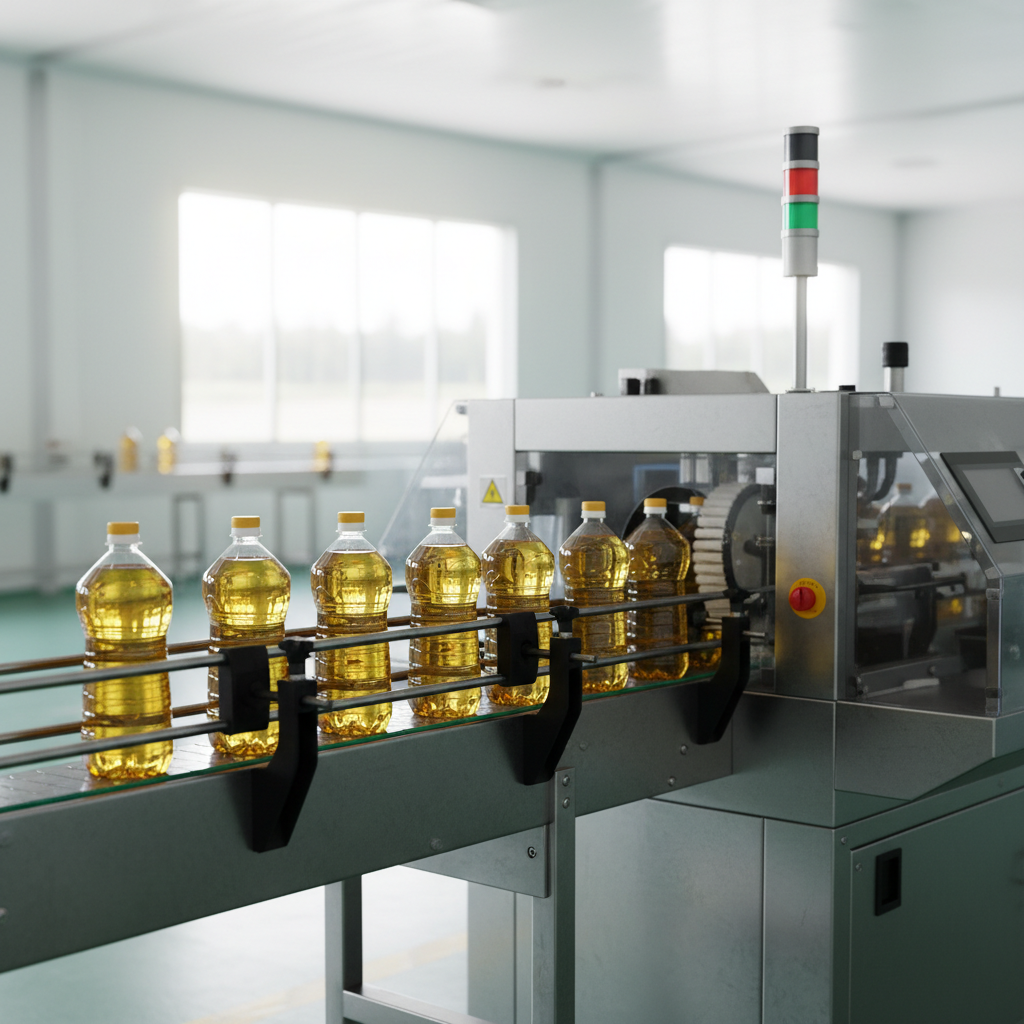
Oil contamination on bottle exteriors prevents label adhesion — a wipe-down station between filler and labeler is essential.
Have a production question?
Planning an edible oil filling line? Share your container types, target BPH, and geographic market with our engineering team.