
What is a mixing tank?
A mixing tank (also called a mixing vessel, blending tank or mixer tank) is a vessel fitted with an agitator that combines liquids, powders or gases into one uniform product. Depending on the process it can blend, dissolve, emulsify, homogenize or simply keep a product moving so it does not separate. A typical unit has a drive motor and gearbox on top, an agitator shaft and blades inside, a liquid inlet, a vent, a manhole for inspection, an optional heating jacket with insulation, and a bottom discharge valve. Working volumes range from small 50 L pilot tanks to 10,000 L and more.
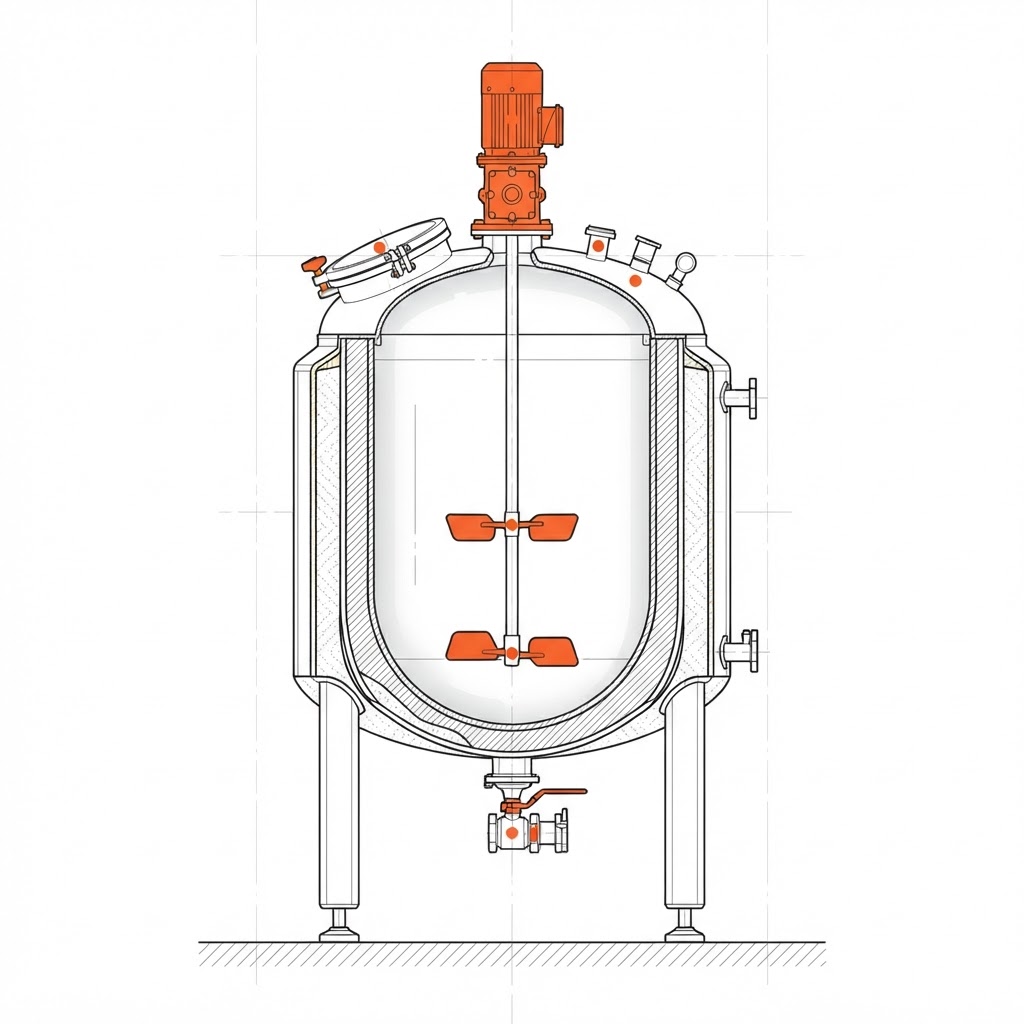
Where mixing tanks are used
Food: sauces, dressings, soups, jams, syrups, yoghurt, nut pastes and molasses. Cosmetics: creams, lotions, gels and liquid soaps. Home and chemical products: shampoo, dishwashing liquid, detergents, solvents, waxes and sealants. Pharmaceutical and water-treatment plants also rely on them for dosing and dissolving.
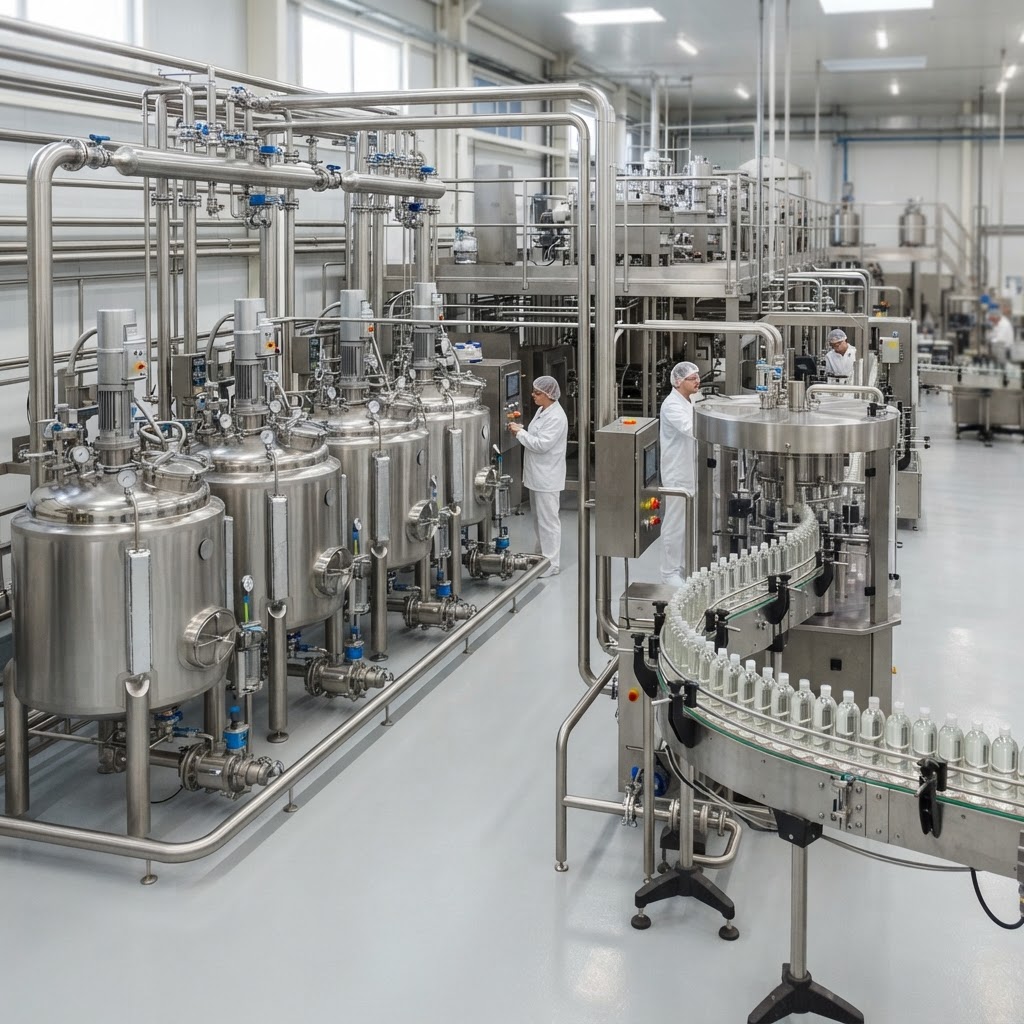
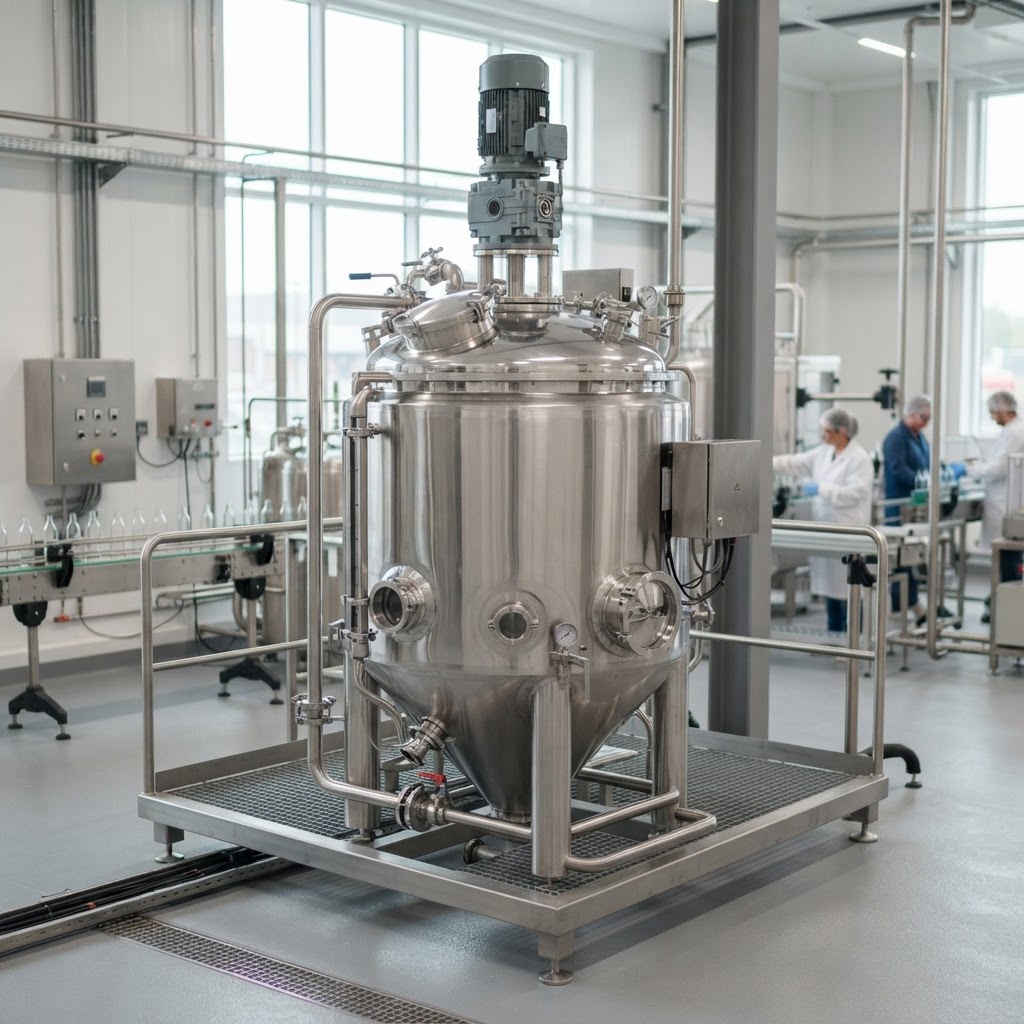
Choosing the tank material
Stainless steel (304 or 316L) is the standard for food, cosmetic and most chemical products: it is strong, hygienic, handles a wide temperature range and is easy to clean. 316L is the right choice for salty, acidic or chloride-rich products. Plastic tanks in polyethylene (PE) or polypropylene (PP) are a low-cost option for some caustic solutions, brines and plating chemicals, but they are limited in temperature and should not be used with strong oxidizers, aromatic or chlorinated solvents. Always check chemical compatibility before deciding.
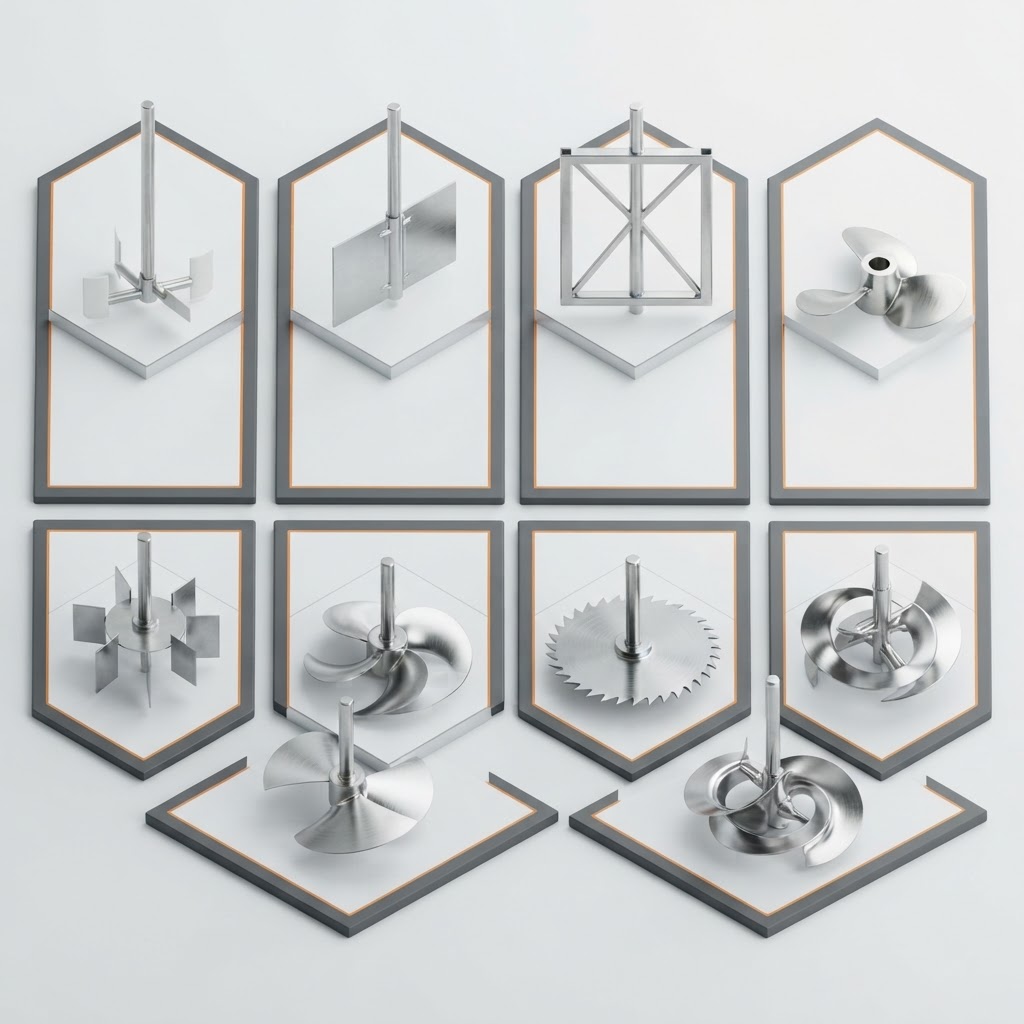
Agitator types
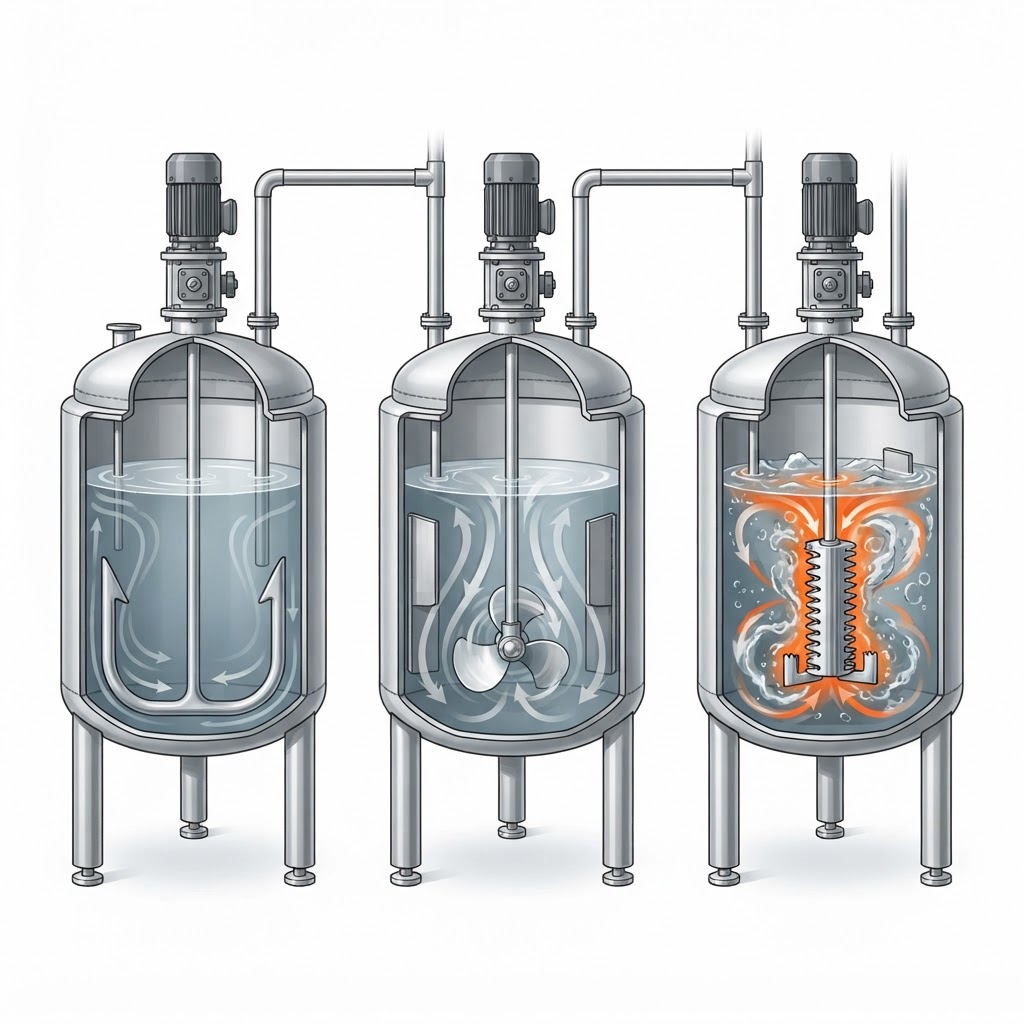
Anchor (with scrapers): sweeps close to the wall at low speed; ideal for medium to high viscosity and products that stick or need heat transfer, such as creams and honey. Paddle and frame: flat blades with gentle, low-shear flow for simple blending, crystallization and solid-liquid mixing. Propeller: axial flow and a strong vortex that pulls powders down and wets them quickly; best for thin liquids and suspensions. Turbine (flat, curved or Rushton disc): can be designed for radial flow (gas dispersion) or axial flow (reactions, suspensions, miscible liquids). Sawtooth dissolver: high speed for breaking powders into liquid. Helical ribbon: moves product both up-and-down and center-to-wall, perfect for very viscous pastes and keeping particles suspended.
Agitator mounting: top, bottom or side entry
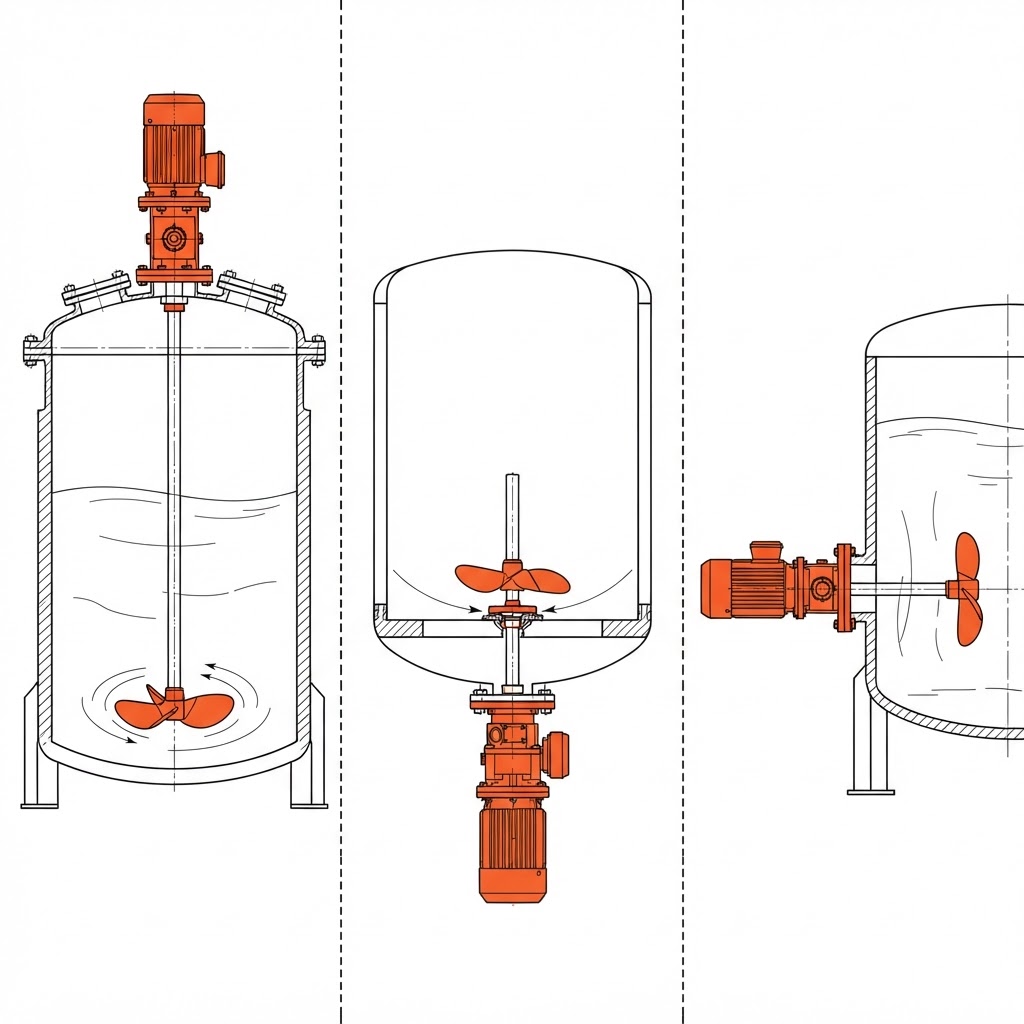
Top entry is the most common layout: the drive sits on the lid and the shaft hangs down into the product; it can be centered, offset or angled. Bottom entry uses a short, stiff shaft driven from below, which keeps heavy drives off the lid, frees the top for nozzles and is very effective for products whose solids settle. Side entry places one or more propeller units in the tank wall; it is efficient and quiet for very large storage tanks where a top shaft would be impractical.
Tank designs and options
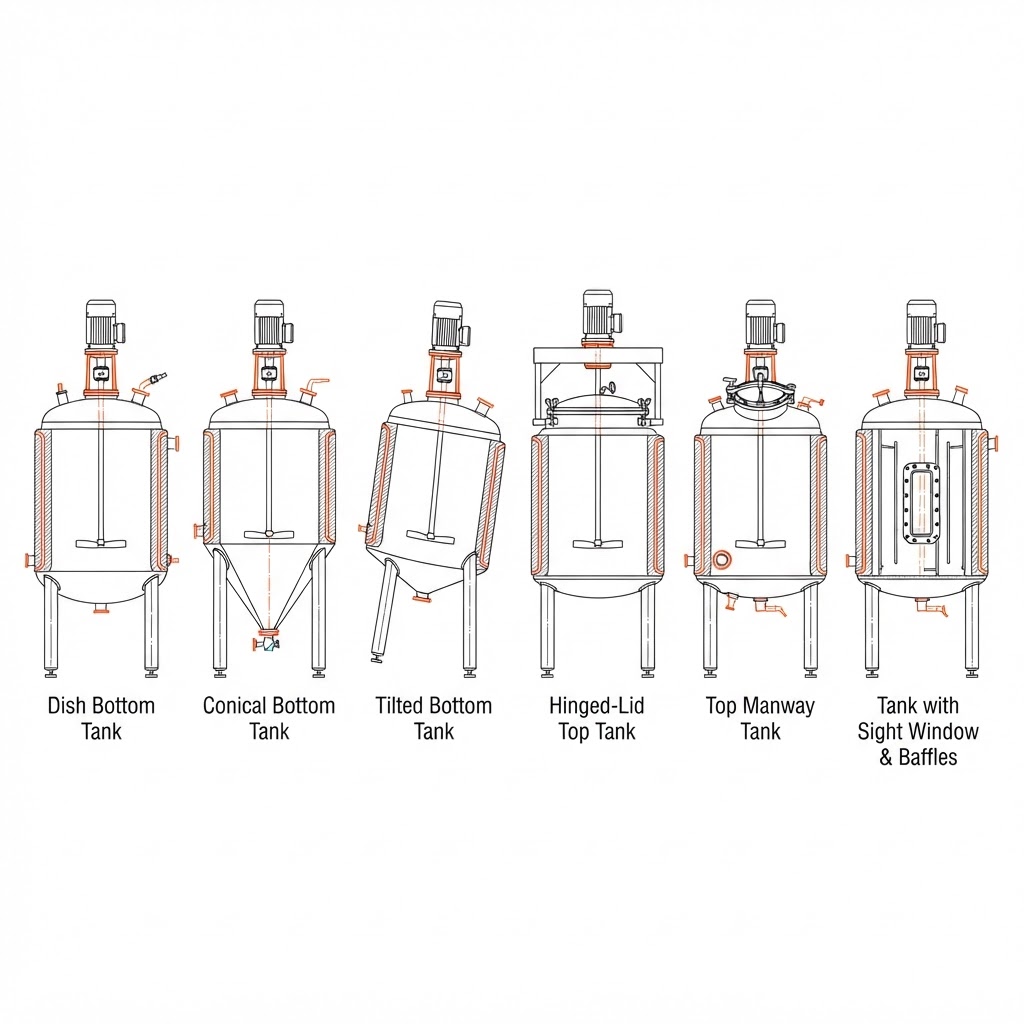
Tanks can be single wall, jacketed (for heating or cooling) or three-layer with insulation. The top can be a hinged lid for easy access or a sealed dome with a manway for hygiene and vacuum. Bottoms are dished, conical or tilted, chosen by how completely the product must drain. Common extras include sight windows, baffles to stop swirling, vacuum, homogenizer heads, load cells for weighing, explosion-proof motors and CIP cleaning balls.
How to choose the right mixing vessel
1) Material: compatible with your product and cleaning chemicals. 2) Design: lid or manway, jacket or not, insulation, bottom shape. 3) Agitator: matched to viscosity and the mixing result you need, not just motor power. 4) Capacity: one batch plus about 20% headspace, sized to your filling speed and floor space. 5) Temperature control: a jacketed tank with heating/cooling if your recipe needs it. Also consider cleaning time, budget and after-sales support.
Connecting the tank to the filling line
The tank should feed the filler through sanitary piping with a transfer pump sized for your product. Many lines use two tanks: one mixing the next batch while the other supplies the filler, so production never stops. Origin Makina designs mixing tanks, storage tanks and filling machines as one matched system.
Have a production question?
Need a mixing tank for your product? Send us your product, batch size and target capacity and our engineers will recommend the right vessel.